
Tell Baqtra
Εμφάνιση αναρτήσεων με ετικέτα Irak. Εμφάνιση όλων των αναρτήσεων
Εμφάνιση αναρτήσεων με ετικέτα Irak. Εμφάνιση όλων των αναρτήσεων
Σάββατο 14 Μαΐου 2011
Μαγειρεύοντας το βραδινό (20/04/2011)
 Εδώ βλέπετε μια καθημερινή στιγμή από το Ινστιτούτο Συντήρησης Υλικών στο οποίο φιλοξενούμασταν! Βρισκόμαστε στην κουζίνα και ο συντηρητής μας Μισέλ Ρογκενμπούκε μας μαγειρεύει φακές!


Πέμπτη 12 Μαΐου 2011
Το τέλος της ανασκαφικής περιόδου (04/05/2011)
 Επειδή κάποιοι από τους αναγνώστες μας νομίζουν ότι η ανασκαφή συνεχίζεται (και με το δίκιο τους βέβαια αφού δεν ενημερώνουμε το blog) εδώ βλέπετε την φωτογραφία που βγάλαμε (έξω απ'το μουσείο)αφού τελειώσαμε την καταμέτρηση των ευρημάτων। Μετά βγάλαμε άλλες δύο φωτογραφίες (ελπίζουμε να σας αρέσουν) και γυρίσαμε στα δωμάτιά μας για να ετοιμάσουμε τις βαλίτσες μας και να πάρουμε το αεροπλάνο της επιστροφής για την Αθήνα!


Κυριακή 1 Μαΐου 2011
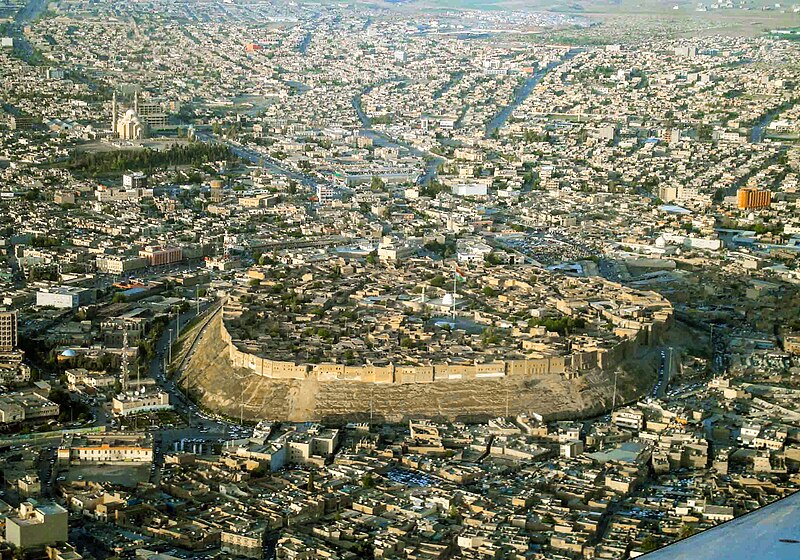
Περιήγηση στην ακρόπολη (15/4/11)

Ως γνωστόν η Παρασκευή είναι μέρα αργίας για τους μουσουλμάνους। Έτσι κι εμείς εκμεταλλευτήκαμε το πρώτο μας ρεπό στο Ερμπίλ για να επισκεφθούμε την ακρόπολη! Εδώ βλέπετε την εξωτερική πλευρά των τειχών.
Αρχαιολογικά μαστορέματα

Την ίδια μέρα ολοκλήρώθηκε η κατασκευή του συστήματος επίπλευσης που θα χρησιμοποιηθεί για την διήθηση του χώματος από την ανασκαφή! Με αυτή τη διαδικασία θα εντοπίσουμε σπόρους και διάφορα πολύ μικρά αντικείμενα. Το νερό που χρησιμοποιείται ανακυκλώνεται και έτσι δεν σπαταλάμε ούτε σταγόνα.
Παρόμοια κατασκευή χρησιμοποιείται για πρώτη φορά σε ανασκαφή στην Κουρδική Περιφέρεια του Ιράκ!
Την κατασκευή της ανέλαβε η Αλεξάνδρα Λιβάρδα.
Δέυτερη μέρα ανασκαφής (14/4/11)

Κατά τη δεύτερη μέρα της ανασκαφής συνεχίσαμε να αφαιρούμε το επιφανειακό χώμα! Ο γεωδαιτικός σταθμός έχει στηθεί και έχουμε ξεκινήσει τις μετρήσεις της ημέρας!
Τετάρτη 20 Απριλίου 2011
Πρώτη μέρα στο Tell Nader (11/4/11)

Κατά την πρώτη μέρα μας στο χώρο πραγματοποιήσαμε τη χαράξη του καννάβου! Εδώ βλέπετε τον πρώτο άριθμό που δόθηκε.
Πέμπτη 24 Μαρτίου 2011
Ancient town discovered in Karbala
Erbil, March 23 (AKnews)- The relics of an ancient town, dating back to two centuries BC- to the Aramean era, was discovered in the suburbs of Karbala, 108 km southwest of Baghdad.
Iftikhar Abbas, the chairwoman for the tourism and archeology committee in Karbala Provincial Council told AKnews the site is located near Al-Zaraza Lake. Abbas said the site which was called the House of Wisdom during the Islamic era was covered by the lake water. However, with the draughts and the recession of the water the ancient site became evident. Some residents in the nearby areas informed the tourism and archeology committee in Karbala about a hill near the lake which eventually led to the discovery. Some fences and substantial hills are discovered in the site. Abbas urged the federal government to allocate a budge to protect the site against looting.
The Aramaeans, also Arameans were a northwest Semitic semi-nomadic and pastoralist people who originated in what is now modern Syria during the Late Bronze Age and the Iron Age. Large groups migrated to Mesopotamia (Iraq) where they intermingled with the native Akkadian (Assyrian and Babylonian) population. The Aramaeans never had a unified empire; they were divided into independent kingdoms all across the Near East. After the Bronze Age collapse, their political influence was confined to a number of Syro-Hittite states, which were entirely absorbed into the Neo-Assyrian Empire by the 8th century BC.
Reported by Hasun Haffar
Lh/AKnews
Iftikhar Abbas, the chairwoman for the tourism and archeology committee in Karbala Provincial Council told AKnews the site is located near Al-Zaraza Lake. Abbas said the site which was called the House of Wisdom during the Islamic era was covered by the lake water. However, with the draughts and the recession of the water the ancient site became evident. Some residents in the nearby areas informed the tourism and archeology committee in Karbala about a hill near the lake which eventually led to the discovery. Some fences and substantial hills are discovered in the site. Abbas urged the federal government to allocate a budge to protect the site against looting.
The Aramaeans, also Arameans were a northwest Semitic semi-nomadic and pastoralist people who originated in what is now modern Syria during the Late Bronze Age and the Iron Age. Large groups migrated to Mesopotamia (Iraq) where they intermingled with the native Akkadian (Assyrian and Babylonian) population. The Aramaeans never had a unified empire; they were divided into independent kingdoms all across the Near East. After the Bronze Age collapse, their political influence was confined to a number of Syro-Hittite states, which were entirely absorbed into the Neo-Assyrian Empire by the 8th century BC.
Reported by Hasun Haffar
Lh/AKnews
Σάββατο 26 Φεβρουαρίου 2011
Iraq: Ancient cities sprung from marshes
For more than a century, archaeologists have believed that ancient Mesopotamian cities – places like Uruk and Ur – were born along the banks of the great rivers of the Middle East and depended mainly on irrigation of surrounding deserts for their survival.
Dr. Jennifer Pournelle, a research assistant professor in the School of the Environment at the University of South Carolina, has a different theory. She believes that the great cities of southern Iraq grew and thrived in vast lowland marshes fed by those rivers, not along the banks of rivers themselves.
Last fall, Pournelle led the first American research team of archaeologists to visit Iraq in more than 25 years. And what she and her colleagues found has caused the start of a shift in thinking about how ancient urban landscapes evolved.
“Clearly, the earliest cities were not strung out along rivers like pearls on a strand. Rather, they were spread across the river delta within and along the margins of marshlands,” said Pournelle, who combines excavation records and archaeological site maps with aerial and satellite imagery, in order to reconstruct ancient environments.
Dr. Jennifer Pournelle, a research assistant professor in the School of the Environment at the University of South Carolina, has a different theory. She believes that the great cities of southern Iraq grew and thrived in vast lowland marshes fed by those rivers, not along the banks of rivers themselves.
Last fall, Pournelle led the first American research team of archaeologists to visit Iraq in more than 25 years. And what she and her colleagues found has caused the start of a shift in thinking about how ancient urban landscapes evolved.
“Clearly, the earliest cities were not strung out along rivers like pearls on a strand. Rather, they were spread across the river delta within and along the margins of marshlands,” said Pournelle, who combines excavation records and archaeological site maps with aerial and satellite imagery, in order to reconstruct ancient environments.
Τρίτη 25 Ιανουαρίου 2011
Δευτέρα 24 Ιανουαρίου 2011
Babylon Organization calls UNESCO to reverse its decision about Babel

During the events of 2003, the ancient city of Babylon was exposed to looting, destruction and theft of its contents from Nebuchadnezzar and Hammurabi museums, Babel Library and the Archive then finally, the city was returned to the General Authority for Antiquities and Heritage after it has been used as a camp for the multinational forces in Iraq between April 2003 and December 2004.
Πέμπτη 13 Ιανουαρίου 2011
What's your sign? Probably not what you think, thanks to the Earth's "wobble"
A recent Harris Poll found that 31 percent of Americans believe in astrology. They're wrong -- although not necessarily in the way their detractors might cite.
The ancient Babylonians based zodiac signs on the constellation the sun was "in" on the day a person was born. During the ensuing millenniums, the moon's gravitational pull has made the Earth "wobble" around its axis, creating about a one-month bump in the stars' alignment.
The result?
"When [astrologers] say that the sun is in Pisces, it's really not in Pisces," said Parke Kunkle, a board member of the Minnesota Planetarium Society.
3,800 year old tablets from Larsa, in Iraq, tell tale of ancient tycoon

He served one of the longest reigning kings in history, bought up real estate like there was no tomorrow and at times did business under the authority of the sun god Shamash.
His name was Abum-waqar and thanks to new research by Professor Karljürgen Feuerherm, of Wilfred Laurier University in Waterloo Canada, we now know his story. "It took me basically a decade to work through this stuff," Feuerherm said at a recent lecture in Toronto.
There are more than 200 tablets that show this man's dealings. Most were dug up by looters in the early 20th century and are now located all over the world with Yale University holding the lions share. Many of them have never appeared in scholarly publications before, much less in popular media.
Δευτέρα 10 Ιανουαρίου 2011
Samarra Resource Page

Ernst Herzfeld’s archaeological excavation of Samarra will mark its 100th anniversary in 2011. To honor the occasion, the Freer|Sackler Archives has created the Samarra Resource Page that collates collections online content, social media content, and related scholarly content, to provide an easy central resource for all of the Herzfeld paper materials and products. Preservation, digitization, and cataloging have been made possible by the Leon Levy Foundation.
Background on the Samarra Excavation
Sponsored by the (then) Kaiser Friedrich Museum in Berlin, Ernst Herzfeld conducted two campaigns in Samarra from 1911-1913. This excavation was the first of its kind to perform a large-scale archaeological survey of Islamic antiquities. The first excavation performed included over nineteen
sites: Great Mosque of al-Mutawakkil, Congregational Mosque of Madinat al-Mutawakkiliyya, Shiite Shrine Complex, Qubbat al-Ṣulaibiyya; palaces of Balkuwārā, Ṣūr Īṣā, and the Qaṣr al-Āshiq; the Cemetery at Shabbat al-Hawā; Mausoleum of Imām al-Dūr; Tall al-Alīq; Ḥarba Bridge and finally the residential architecture at al-Quraina, al-Qāṭūn, al-Jubairiyya, and west of Ṣūr Īṣā, and the baths. His second, and arguably more ambitious campaign, focused on Dār al-Khilāfa.
Σάββατο 8 Ιανουαρίου 2011
NY Times lists Iraqi-Kurdistan among “41 places to visit in 2011”
An article in the travel section of yesterday’s New York Times (NYT) lists the semi-autonomous Iraqi Kuurdistan region among the 41 places in the Worlhttp://www.aknews.com/en/aknews/3/208701/d worth visiting this year.
Referring to the relative security and stability this northern region of Iraq has enjoyed in recent years, the NYT provides details of a few of the travel companies offering trips to its landmarks such as Erbil’s citadel which dates back to the Assyrian empire and the site of the Battle of Gaugamela, in which Alexander the Great defeated the Persian king Darius III leading to the fall of the Achaemenid Empire.“Safety, history and a warm welcome in a stable corner of Iraq” the NYT article is sub-headed. According to the Distant Horizons travel company that has been bringing small groups of American visitors to Kurdistan since 2008, the biggest attraction to the region is the opportunity for “authentic cultural encounter”.
“Authenticity is something that can be lost so quickly as development occurs,” the NYT quotes Distant Horizons’ Janet Moore as saying.
Karl Allen (AKnews): k.allen@aknews.com
It’s Iraq but It’s Not, Part 2

By YASMINE MOUSA
January 7, 2011, 5:27 pm
ERBIL, Iraq – We arrived at the checkpoint that separates Iraq from Kurdistan and waited to get in, counting the seconds. It felt as if we were in a prison and now waited to be released to a place where other Iraqis feel free – and fearless.
We live in Baghdad, the capital, which in most countries would be the cleanest and most developed city. Now, nearly eight years after the invasion, we feel only disappointment. The lack of security and services made us excited about leaving
We were traveling to another part of Iraq, the Kurdish region in the north, but it felt like we were visiting another country.
It’s Iraq but It’s Not, Part 1
January 6, 2011, 1:07 pm
By YASMINE MOUSA
ERBIL, Iraq — On a recent trip to the Kurdistan region north of Iraq, duty required us to drive to a place here in its capital that we didn’t know. My colleagues and I, all Iraqis, stopped by the first police officers we spotted, naturally enough, to ask for directions. We asked in Arabic, then I tried in English.
The young officer did understand us, which is how I discovered the language barrier that is slowly emerging here, dividing the country not only linguistically, but also generationally.
Τετάρτη 5 Ιανουαρίου 2011
Τρίτη 4 Ιανουαρίου 2011
11,496 companies function in Kurdistan

Erbil, Jan.4 (AKnews)- The number of the registered companies in the Kurdistan Region amounts to over 11,000 companies.
Twana Ahmed, the media secretary for the Kurdistan Region’s Council of Ministers applauded the Region for attracting the foreign investors and encouraging the local businessman, describing its policies “successful.”
Ahmed told AKnews according to the latest official figures some 11,496 companies, foreign and local, have put their assets into investment in various fields of the Region.
Εγγραφή σε:
Αναρτήσεις (Atom)